Food insecurity in Canada, by province: the 2026 breakdown
Related comparisons
Almost one in four Canadians lived in a food-insecure household in 2025 — a record high. This is the full provincial and territorial breakdown of household and child food insecurity, where it is worst, and what is driving it.
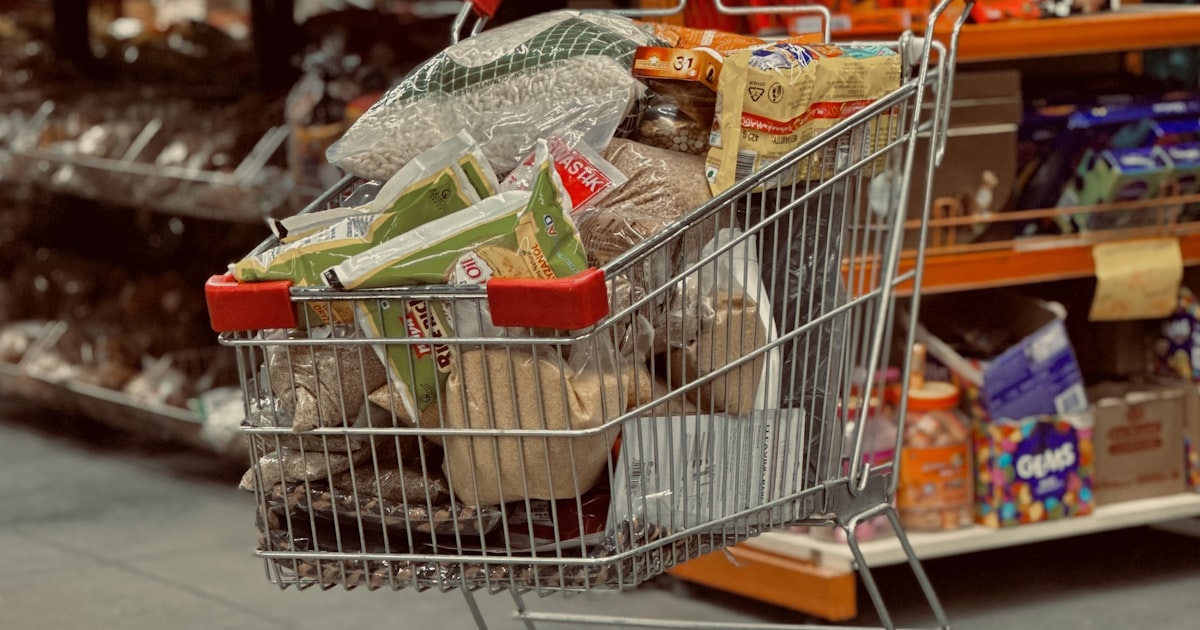
Food insecurity — not having reliable access to enough affordable, nutritious food — has reached the highest level ever recorded in Canada. In 2025, almost one in four people in the ten provinces lived in a food-insecure household, and nearly one in three children did. The crisis is national, but it is not evenly spread: the gap between the best-off and worst-off jurisdictions is enormous. This post lays out the full provincial and territorial picture for both households and children, using the most recent data from Statistics Canada's Canadian Income Survey as analysed by PROOF, the University of Toronto research team that monitors food insecurity in Canada.
The national picture
22.9%
In 2025, 22.9 percent of people in the ten provinces — roughly 8.7 million Canadians — lived in a household that experienced some level of food insecurity in the previous year. That is the highest rate PROOF has recorded since national monitoring began, and it continues a steep climb that started when grocery inflation took off in 2021. Just five years earlier, the rate sat closer to 13 percent.
Most of that hardship is not mild. The majority of food-insecure households fall into the moderate or severe categories, meaning the quality or quantity of food they ate was compromised, or family members skipped meals or went whole days without eating because there was not enough money for food. Severe food insecurity — the most extreme tier — has risen especially fast.
Children are hit harder than the population as a whole. In 2025, 30.8 percent of children under 18 in the ten provinces — about 2.4 million kids — lived in a food-insecure household. Families with children consistently post higher rates than households without children, because a fixed income has to stretch across more people and more competing costs.
The provincial breakdown
Here is how the provinces and territories ranked on overall household food insecurity in 2025, from highest to lowest:
Nunavut — 56.4% (highest in Canada, more than double any province)
Alberta — 28.4%
New Brunswick — 28.2%
Manitoba — 27.9%
Saskatchewan — 27.4%
Nova Scotia — 26.1%
Newfoundland and Labrador — 25.4%
Prince Edward Island — 24.9%
Ontario — 23.0% (close to the national average)
British Columbia — 21.4%
Northwest Territories — 16.4%
Yukon — 15.5%
Quebec — 18.0% (lowest among the provinces)
These are overall household rates; child-specific rates run several points higher in almost every province. Wondering how your province compares on grocery prices specifically? Quebec and Alberta tend to run below the national average, while British Columbia and the territories are the most expensive. Grocery Saver tracks real deals across chains in your city so you can cut your bill wherever you live.
Where it is worst
56.4%
Nunavut is in a category of its own. More than half of all households — and roughly two in three children — are food-insecure, driven by extreme grocery prices in fly-in communities, limited local food production, low incomes relative to costs, and the legacy of colonial disruption to traditional food systems. No province comes close.
Among the provinces, the Prairies and Atlantic Canada carry the heaviest burden. Alberta posted the highest provincial rate in 2025 at 28.4 percent and also had the highest rate of severe food insecurity — a striking result for a province with relatively strong average incomes, and a reminder that food insecurity is about the gap between what households earn and what they must spend, not just headline wages. New Brunswick, Manitoba, Saskatchewan and Nova Scotia all sit close behind. For children specifically, New Brunswick led the provinces in 2025 at 38.1 percent.
Where it is lowest
Quebec is the consistent low outlier among the provinces, at 18.0 percent overall in 2025 and the lowest rate of severe food insecurity. Researchers generally attribute Quebec's advantage to a stronger social safety net — including subsidized childcare and more generous family benefits — and a competitive discount grocery market that keeps food prices lower than much of the country. British Columbia and Ontario sit nearer the middle, while the Yukon and Northwest Territories post lower rates than the provincial worst, though still well above where any region should be.
Which families are hit hardest
Food insecurity is not spread evenly within provinces. Some household types are dramatically more exposed:
Lone-parent families led by women — nearly half (47.4 percent) were food-insecure in 2025
Black Canadians — 41.3 percent, the highest rate of any group reported
Indigenous Peoples living off-reserve — 34.7 percent, and almost certainly higher for on-reserve and remote Northern communities, who are underrepresented in the national survey
Families with children — 29.4 percent, well above the all-household average
Households relying on social assistance as their main income source — among the highest rates of any group
The single-mother figure is the one to sit with: in a family headed by a woman on her own, the odds of food insecurity are close to a coin flip. When one income has to cover housing, childcare and food, food is the line item with the most give — and so it is the one that gets cut.
What is driving it
Record food insecurity is the collision of several cost increases hitting low- and middle-income families at once:
Housing costs that swallow 40 to 60 percent of income for many lower-income households, leaving little for food
Grocery inflation that has compounded year after year since 2021
Wages and benefits that have not kept pace with the combined rise in housing, food and transport costs
The expiry of pandemic-era income supports that had temporarily reduced poverty
Higher interest rates that raised debt-carrying costs for households with mortgages or variable debt
"Food insecurity is fundamentally a problem of inadequate income. Families are not food-insecure because they lack budgeting skills — they are food-insecure because they do not have enough money."— PROOF, University of Toronto
What you can do
Donate to your local food bank — monetary donations stretch much further than canned goods because food banks buy at wholesale prices
Support school food and breakfast programs in your community
Advocate for income-based solutions: the research is clear that food insecurity is solved by money, not just food charity
If your household is struggling: food banks, school programs and community meals exist for you, and there is no shame in using them
Grocery Saver can't fix the income gap — but it can shrink the grocery side of it. We surface the real lowest prices across chains in your city each week, so the food budget goes further before it forces harder choices.
The takeaway
Almost one in four Canadians — and nearly one in three children — now live in a household that cannot reliably afford food, the highest level on record. The geography is consistent: Nunavut and the territories sit at the extreme, the Prairies and Atlantic Canada carry the heaviest provincial burden, and Quebec carries the lightest, while single-mother, Black and Indigenous families are exposed everywhere. The numbers describe a problem of household income meeting the cost of housing and food — and they are a reminder that grocery affordability is not an abstraction. For millions of Canadians, including 2.4 million kids, it is dinner.
Frequently asked questions
How many Canadians are food-insecure?
In 2025, about 22.9 percent of people in the ten provinces — roughly 8.7 million Canadians — lived in a food-insecure household, the highest rate PROOF has recorded. Among children the figure was higher still, at 30.8 percent, or about 2.4 million kids.
Which province has the highest food insecurity in Canada?
Among the provinces, Alberta had the highest household food insecurity rate in 2025 at 28.4 percent, narrowly ahead of New Brunswick (28.2 percent) and Manitoba (27.9 percent). Nunavut is far higher than any province at 56.4 percent — more than double the provincial worst.
Which province has the lowest food insecurity?
Quebec consistently has the lowest household food insecurity among the provinces — 18.0 percent in 2025, and the lowest rate of severe food insecurity. This is generally attributed to a stronger social safety net (including subsidized childcare and family benefits) and a competitive discount grocery market.
How does child food insecurity compare to the overall rate?
Children are hit harder. In 2025, 30.8 percent of children under 18 lived in a food-insecure household, compared with 22.9 percent of people overall. Families with children post higher rates because a fixed income must stretch across more people and competing costs. New Brunswick led the provinces for children at 38.1 percent.
Why is food insecurity so high in Nunavut?
Nunavut's rate — 56.4 percent of households in 2025 — reflects extremely high grocery prices in fly-in communities, limited local food production, low incomes relative to costs, and the disruption of traditional food systems. It is more than double the rate of any province.
Which families are most affected by food insecurity?
Female lone-parent families are hit hardest — nearly half (47.4 percent) were food-insecure in 2025. Rates were also far above average for Black Canadians (41.3 percent), Indigenous Peoples living off-reserve (34.7 percent), and households relying on social assistance.
What causes food insecurity in Canada?
It is primarily a problem of inadequate income colliding with rising costs: unaffordable housing, compounding grocery inflation since 2021, wages and benefits that have not kept pace, the expiry of pandemic income supports, and higher interest rates. Researchers stress it is solved by money — adequate incomes and benefits — not just food charity.
Put this into practice
Add this week's sale items to your list and build a cheaper multi-store trip in a few minutes.