Food banks were supposed to be temporary. Here is how they became permanent.
Related comparisons
Canada's first food bank opened in Edmonton in 1981 as a short-term emergency measure during a recession. More than four decades later, food banks are permanent national infrastructure serving record numbers. This is how that happened.
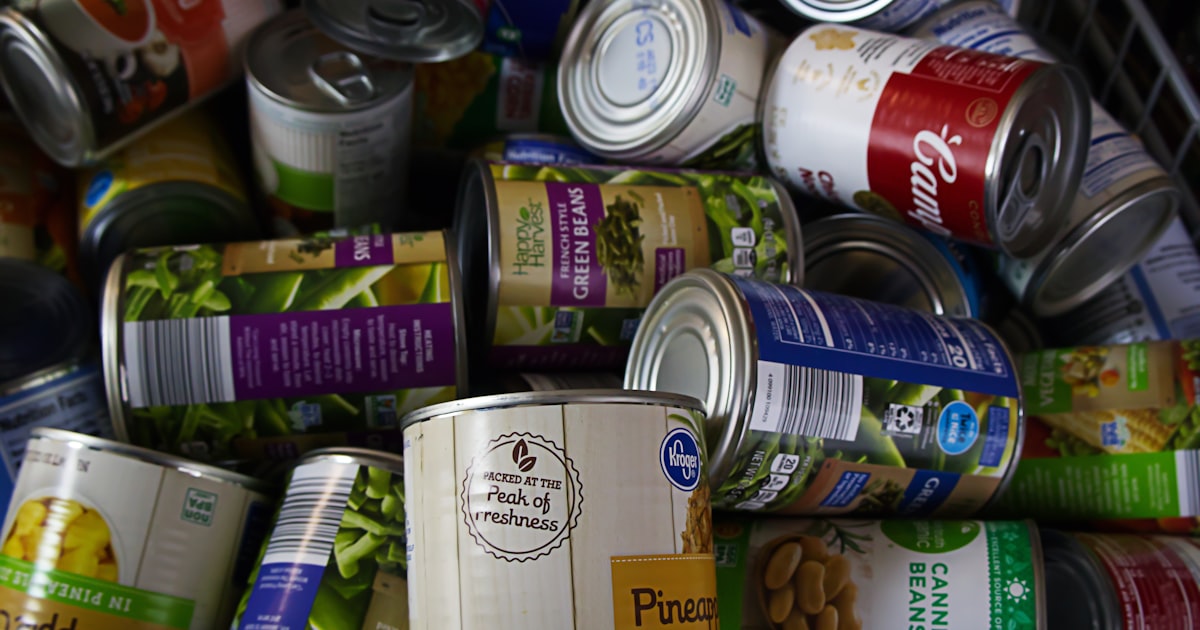
Canadian food banks recorded their worst year on record in 2025. But the more revealing story is not the size of the number — it is how long the institution behind it has lasted. Food banks were never meant to be a permanent part of Canada. They were an emergency measure, built in one province during one recession, and widely expected to disappear within a few years. More than four decades later, they are permanent national infrastructure. This is the history of how a temporary fix became a fixture.
It started in one province, in one recession
Canada's first food bank opened in Edmonton, Alberta. On January 16, 1981, the Edmonton Gleaners Association — known simply as Edmonton's Food Bank — received its charter of incorporation, and Canada's first food bank was born. It grew out of an ad-hoc committee from the city's Marian Centre, a group of local agency workers including Mike Fagan, Bob McKeon and Francis Lopez, who had spent the previous year studying the idea after watching demand for emergency food outstrip what local charities could supply.
Edmonton, 1981
The timing was not an accident. Alberta's oil boom had collapsed into a bust, and the broader early-1980s recession — high interest rates and double-digit unemployment — was pushing more people into hardship than the existing welfare system could absorb. A food bank was understood as a stopgap: a way to redistribute surplus food to front-line agencies until the economy recovered and the need went away.
A stopgap that spread anyway
The need did not go away. The model spread quickly — and not because anyone planned a national network. Other cities facing the same recession copied Edmonton. By the mid-1980s, emergency food services had appeared across at least six provinces: Alberta, British Columbia, Manitoba, Ontario, Quebec and Saskatchewan.
Toronto's Daily Bread Food Bank was incorporated in 1983 and would become the largest in the country. By 1987, the food bank community had created the Canadian Association of Food Banks to coordinate nationally — the body that, in 2008, became Food Banks Canada. Within a single decade, an emergency response invented in one Edmonton committee room had become a permanent, organized sector with its own national association.
The warning that came early
Almost as soon as food banks took hold, researchers warned that making them permanent was itself the problem. In 1986 — just five years after Edmonton opened — social policy scholar Graham Riches published Food Banks and the Welfare Crisis, one of the first serious Canadian critiques of the model. His argument was not that food banks were unkind. It was that their very existence signalled something had broken.
"Food banks represent the collapse of the social safety net, not a solution to hunger."— Graham Riches, Food Banks and the Welfare Crisis (1986)
Riches would spend the next three decades developing this critique, culminating in his 2018 book Food Bank Nations. His thesis is that entrenched charitable food banking lets governments off the hook: by appearing to manage hunger, food banks depoliticize it, absorbing public pressure that might otherwise force changes to wages, social assistance and housing. The charity becomes a substitute for policy — and the longer it operates, the more normal that substitution looks.
How "temporary" became permanent
Whatever the original intent, the trajectory is now unambiguous. Food banks have operated continuously in Canada for more than 40 years, and demand has not plateaued — it has accelerated. Edmonton's Food Bank, the original, now feeds tens of thousands of people every month. Daily Bread's network in Toronto alone recorded millions of client visits in a single year.
~2.2 million / month
According to Food Banks Canada's HungerCount 2025, there were nearly 2.2 million visits to food banks in a single month in March 2025 — the highest in the country's history, and up roughly 99 percent from March 2019. It took decades for monthly visits to reach one million; it took only about five years to double that. Food Banks Canada now describes record-breaking demand as the "new normal."
The framing from inside the sector has shifted accordingly. Where food banks once positioned themselves as a temporary act of charity, their own leaders now describe the numbers as evidence of structural failure. As Daily Bread's chief executive, Neil Hetherington, has put it: "Every food bank visit is a policy failure. Charity alone cannot solve a crisis this deep." That is, almost word for word, the argument Riches made in 1986 — now coming from the organizations themselves.
Why this history matters for grocery prices today
Understanding food banks as a 44-year-old institution rather than a recent emergency reframes the affordability conversation. Record food bank use is not a sudden shock — it is the visible end of a long-running gap between what households earn and what they must spend on housing and food. When grocery prices compound year over year on top of high rent, food becomes the flexible line in a budget that has no flex left, and the food bank absorbs the difference. The institution has lasted precisely because that gap has never closed.
Grocery Saver exists to shrink one part of that gap. We track real deals across chains in your city so you can cut your grocery bill before it forces harder choices — and so the money you save stays in your pocket.
The takeaway
Canada built food banks to be temporary, treated their early growth as a national embarrassment, and was warned at the outset that institutionalizing them would let the underlying problem fester. Four decades and 2.2 million monthly visits later, that warning reads less like criticism and more like a forecast. The history of food banks in Canada is, in the end, the history of a temporary measure that was never replaced by a permanent solution.
Frequently asked questions
When did food banks start in Canada?
Canada's first food bank opened in 1981. The Edmonton Gleaners Association — Edmonton's Food Bank — received its charter of incorporation on January 16, 1981, during the recession and Alberta oil bust of the early 1980s.
Where was Canada's first food bank?
In Edmonton, Alberta. It was founded by an ad-hoc committee from the city's Marian Centre and was the first food bank in the country. Other cities copied the model, and by the mid-1980s food banks had spread across at least six provinces.
Were food banks meant to be temporary?
Yes. Food banks were created as a short-term emergency response to the early-1980s recession and were widely expected to disappear once the economy recovered. Instead they became permanent: more than 40 years later they are a core part of Canada's food-security landscape, with record demand.
Who is Graham Riches and what is the critique of food banks?
Graham Riches is a Canadian social policy scholar who published Food Banks and the Welfare Crisis in 1986 and Food Bank Nations in 2018. He argues that food banks signal the collapse of the social safety net rather than solving hunger, and that institutionalizing charitable food relief lets governments avoid addressing the root causes — wages, social assistance and housing.
How many Canadians use food banks now?
Food Banks Canada's HungerCount 2025 recorded nearly 2.2 million food bank visits in March 2025 — the highest in Canadian history and roughly double the level of March 2019. The organization describes record demand as the "new normal."
Put this into practice
Add this week's sale items to your list and build a cheaper multi-store trip in a few minutes.